


























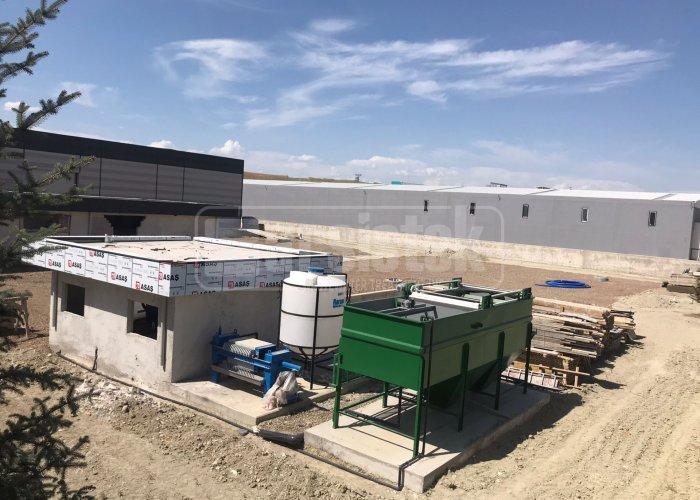
Industrial wastewater treatment plants are specialized systems designed for the removal of chemical and organic pollutants originating from factories and production facilities. They also provide engineering solutions tailored to the waste characteristics of each sector. They are successfully implemented in the textile, food, chemical, automotive, and paper industries.
What is Industrial Wastewater Treatment?
Industrial wastewater treatment plants are systems specifically designed for the treatment of wastewater generated from factories and production facilities. Industrial wastewaters differ from domestic wastewaters in that they contain heavy metals, chemical compounds, organic solvents, and a high pollution load.
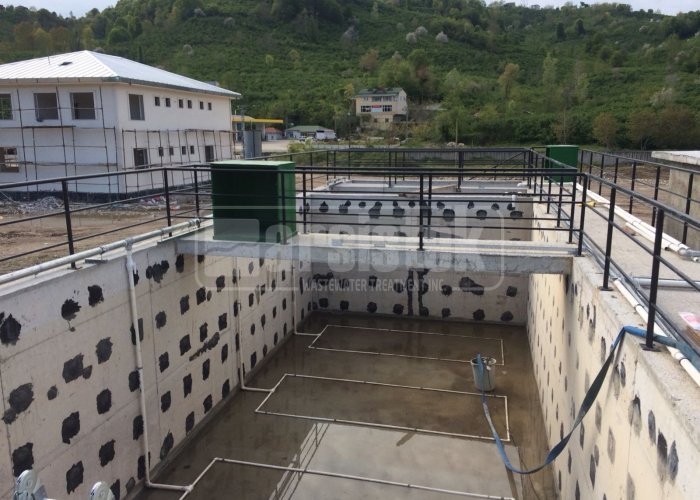
In these systems, physical, chemical, and biological treatment methods are combined according to the characteristics of the wastewater. Additionally, the specific waste characteristics of each sector's production process are taken into consideration. Therefore, the engineering design is based on wastewater analysis and laboratory tests.
As a result, industrial wastewater treatment plants ensure discharge standards compliant with environmental regulations. Particularly, it is mandatory to remain below sectoral limits as required by the Water Pollution Control Regulation. Furthermore, treated water can be recovered and utilized as process water through MBR systems.

Treatment Stages
- pH Balancing: Brings water to a neutral level (pH 6.5-8.5)
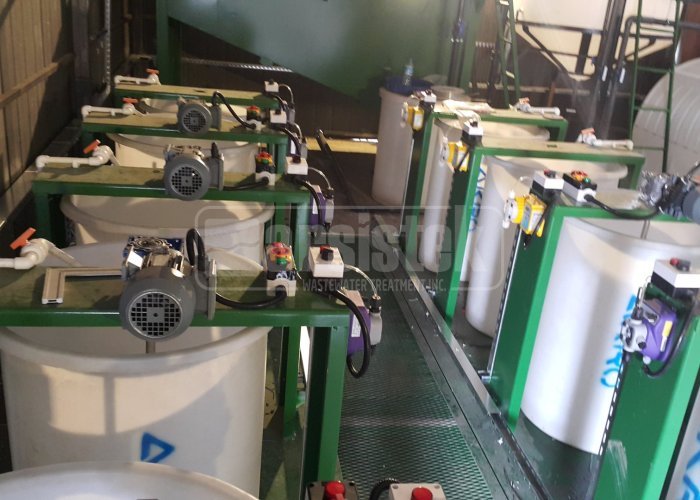
- Coagulation-Flocculation: Converts colloidal substances into larger particles
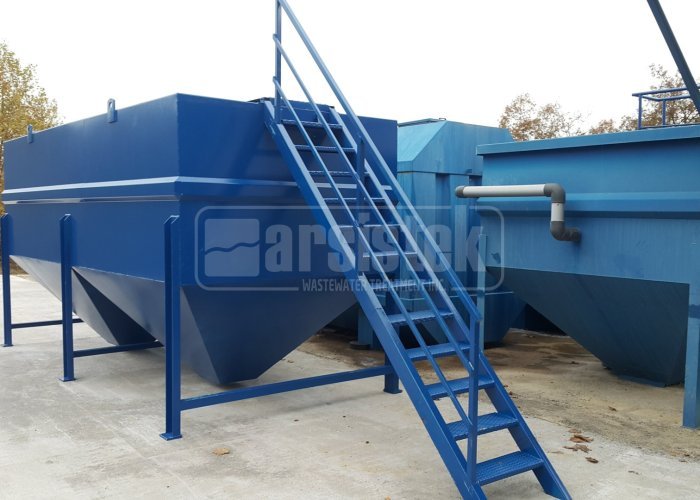
- Settling: Separates flocs by gravity settling
- Filtration: Clarification through sand, carbon, and membrane filtration
- Oxidation: Eliminates harmful compounds such as cyanide and sulfide
- Reduction: Converts metals like chromium (VI) into harmless forms
- Biological Treatment: Breaks down organic substances with microorganisms
- Advanced Treatment: Final quality through RO, UV, and disinfection
Sectoral Solutions
- Textile Industry: Dyeing, finishing, and washing wastewater
- Food Sector: Slaughterhouses, dairy, beverage, canning factories
- Chemical Industry: Pharmaceutical, cosmetic, detergent production
- Automotive: Surface coating and painting wastewater
- Pulp and Paper Sector: Cellulose, kraft, and recycling
- Metal Processing: Galvanizing, anodizing, acid baths
- Petrochemical: Refineries and petrochemical complexes
- Mining: Ore enrichment wastewater
How to Design a Facility?
Industrial wastewater treatment plant design begins with wastewater characterization. Samples taken from the production process are analyzed in detail in the laboratory. In addition, peak flows, average loads, and pollution parameters are determined.
Then, a treatment process suitable for the characteristics of the wastewater is selected. Particularly, in wastewater containing heavy metals, chemical precipitation is prioritized, while biological treatment is preferred for organic-loaded wastewaters. Therefore, each plant requires its own unique engineering solution.
As a result, detailed P&ID diagrams, equipment selections, and PLC automation design are completed. Moreover, biological treatment and MBBR technology are combined to achieve high efficiency.

Advantages of Industrial Treatment
Project Gallery
8 fotoğraf
Other Services
Package Treatment Systems
Package Treatment Systems are compact, portable, and turnkey package treatment plants for the treatment of domestic and ...
Detailed InformationMBR Treatment Bioreactor Facilities
MBR Treatment (Membrane Bioreactor) systems combine biological treatment with membrane filtration in a single unit, offe...
Detailed InformationMBBR Wastewater Treatment Systems
MBBR (Moving Bed Biofilm Reactor) is a modern solution that provides high-efficiency wastewater treatment with moving be...
Detailed InformationBiological Wastewater Treatment Plants
Biological wastewater treatment is the process of breaking down organic matter with the help of microorganisms to levels...
Detailed InformationLamella and Sedimentation Systems
Lamella sedimentation systems are compact sedimentation units equipped with finely inclined plates. They also use 80% le...
Detailed InformationTreatment Plant Operation Services
The wastewater treatment plant operation service ensures the professional management of your existing facility with our ...
Detailed InformationUV Disinfection Systems
UV disinfection systems are environmentally friendly solutions that disinfect water using ultraviolet rays without the u...
Detailed InformationReverse Osmosis Systems
Reverse osmosis (RO) systems are advanced purification technologies that purify water at high pressure using semi-permea...
Detailed InformationMobile RO Water Treatment Systems
Mobile RO water treatment systems are portable solutions that integrate reverse osmosis technology on a container or tra...
Detailed InformationSand and Carbon Filtration Systems
Sand and carbon filtration systems are effective water treatment solutions that remove sediment, suspended solids, chlor...
Detailed InformationUltrafiltration UF Systems
Ultrafiltration UF systems are advanced treatment technologies that remove microorganisms, suspended solids, and high mo...
Detailed InformationTrailer Water Treatment Systems
Trailer water treatment systems are mobile solutions integrated onto a trailer that can be towed to the desired location...
Detailed InformationFrequently Asked Questions
Industrial wastewater treatment plants are designed for all types of production facilities, primarily in the textile, food, chemical, automotive, paper, metal processing, petrochemical, pharmaceutical, cosmetic, slaughterhouse, beverage, and mining sectors. Each sector's production waste requires different treatment processes.
Heavy metals are treated using the chemical precipitation method. After pH adjustment, metal hydroxides are formed and precipitated by the addition of coagulant and flocculant. Toxic forms such as chromium (VI) are first reduced with sodium bisulfite and then precipitated.
Domestic wastewaters are generally more homogeneous in structure and typically contain organic pollutants. Industrial wastewaters, on the other hand, may contain heavy metals, chemicals, and organic solvents, and have highly variable characteristics. Additionally, due to the presence of high-concentration pollutants, they require special process design. Biological treatment can be used in both cases.
Samples are taken from different points of the production process. In the laboratory, analyses for BOD, COD, TSS, pH, conductivity, heavy metals, total nitrogen, and phosphorus are conducted. In addition, peak flows and daily load variations are also measured. These data form the basis for the design of the treatment process.
Yes, it is possible to recover 80-95% of treated water in modern industrial treatment plants. Water that is further treated with MBR systems and purified through reverse osmosis can be used for process water, cooling tower feed, and irrigation purposes.
The investment cost is calculated specifically for the project based on the capacity of the facility, the characteristics of the wastewater, and the selected process. Additionally, the flow rate of the water to be treated, pollutant parameters, and the desired quality of the effluent also affect the price. We provide a detailed proposal tailored to your project with our free discovery and feasibility report.