

























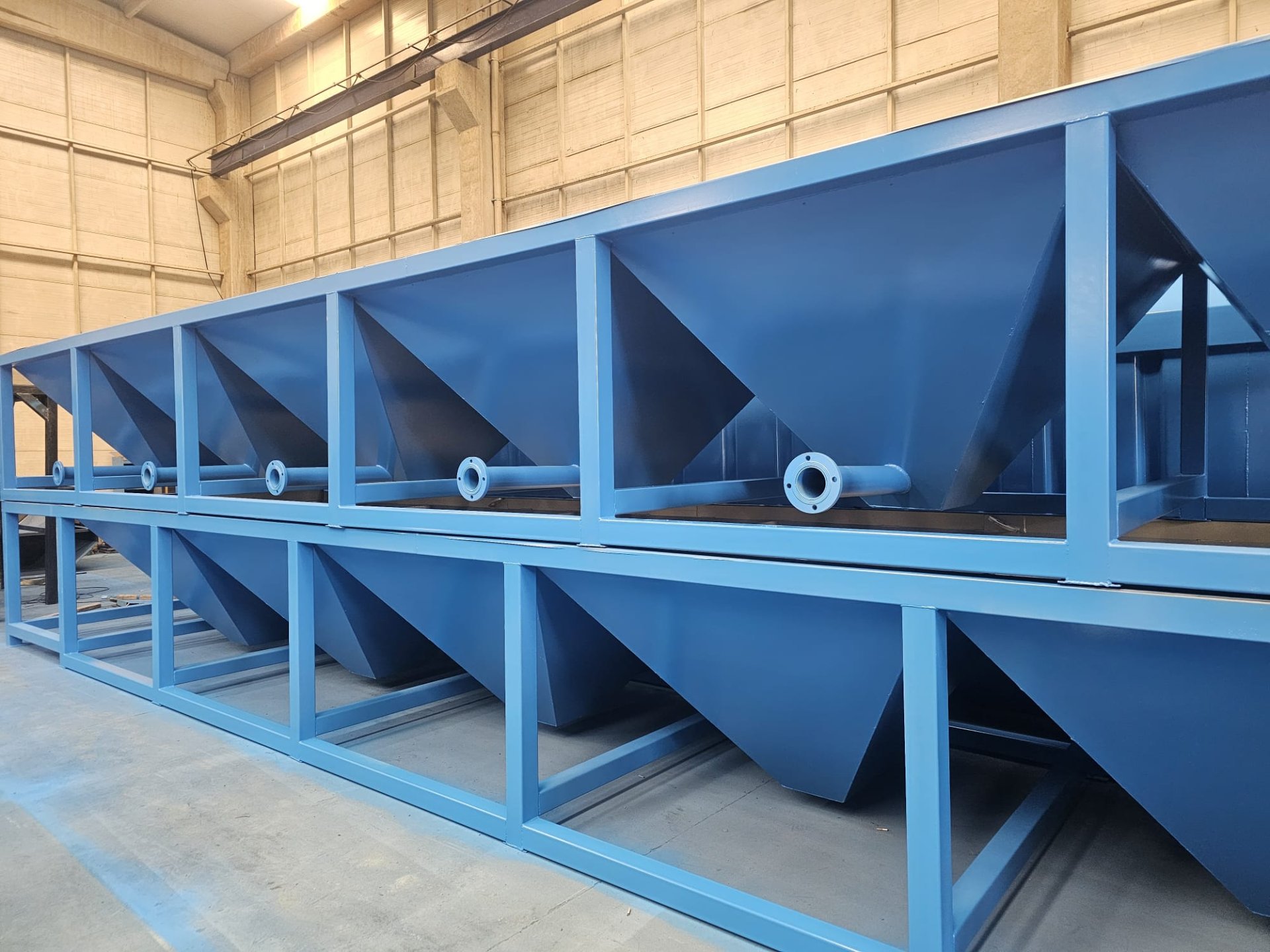
Lamella sedimentation systems are a high-efficiency solid-liquid separation technology implemented on inclined plates. They require 75-85% less space compared to classical sedimentation tanks, feature short retention times, and demonstrate high AKM removal performance. They are used for pre-treatment, advanced treatment, and sludge thickening purposes in industrial and domestic wastewater projects.
What is a Lamella Settling System?
Lamella sedimentation systems are specially designed sedimentation units equipped with thin and inclined plates. These systems separate suspended solids in wastewater through the effect of gravity. Thanks to the inclined plate structure, the water flow slows down, and particles slide off the plate surface and accumulate at the bottom.
Lamella systems are much more compact compared to classical sedimentation tanks. In addition, they provide 8-12 m² of effective sedimentation surface area in a 1 m² footprint. Therefore, they use 80% less space for the same treatment capacity.
As a result, lamella sedimentation systems are an indispensable part of modern treatment plants with high efficiency, low energy consumption, and compact design. They are particularly widely used in the sedimentation stage of industrial wastewater treatment and biological treatment systems.

Technical Specifications
- Plate Angle: 55°-60° optimum slope (ensures particle sliding)
- Plate Distance: 50-100 mm interval (for hydraulic load)
- Material: Carbon steel (epoxy coated) or 304/316 stainless steel
- Effective Surface: 8-12 m² settling area for 1 m² base
- Loading Rate: 0.5-1.5 m³/m²·hour hydraulic load
- AKM Removal: >90% suspended solid removal
- Sludge Collection: Conical bottom, automatic sludge discharge
- Capacity: Custom design in the range of 10 - 5,000 m³/hour
Application Areas
- Municipal Wastewater Treatment Facilities: Primary and secondary sedimentation
- Drinking Water Treatment: Sedimentation after coagulation
- Industrial Wastewater: After chemical treatment
- Food and Dairy: Oil and solids separation
- Textile Industry: Dye and finishing sedimentation
- Metal Coating: Heavy metal hydroxide sedimentation
- Mining and Ore: Ore enrichment facilities
- Paper Industry: Cellulose fiber and filler
How Does Lamella Work?
In the lamella settling system, wastewater is directed to the inlet section. Additionally, the inlet velocity is reduced to prevent turbulence. Subsequently, the water flows upward between the inclined plates.
Particles begin to accumulate on the surface of the plates due to the effect of gravity. Therefore, this accumulation slides down thanks to the plate inclination and collects in the sludge collection area. The clear water rising is discharged from the weir at the top.
As a result, the settling distance of the particles is only as much as the distance between two plates. This significantly reduces the settling time and increases efficiency. It provides high treatment performance, especially in wastewater coagulated with fine particles and flocculants.

Advantages of Lamella System
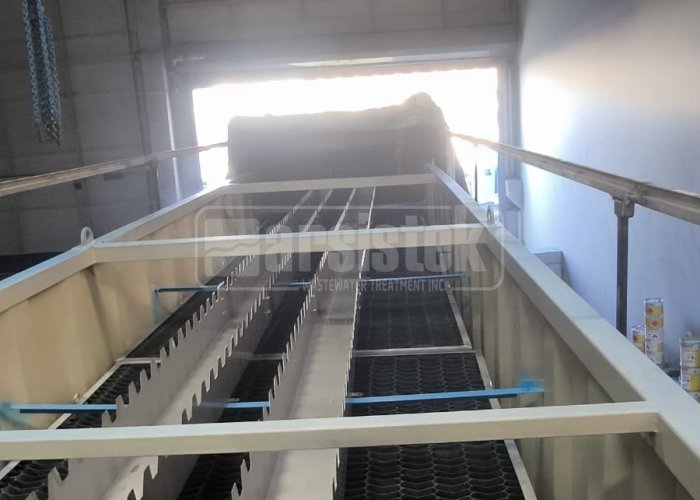
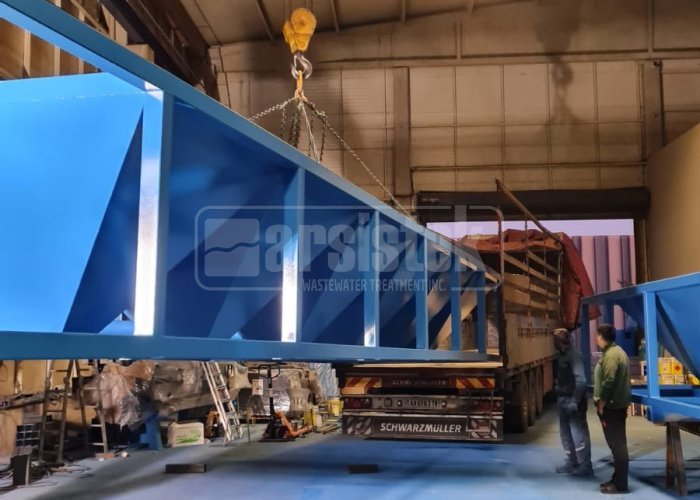
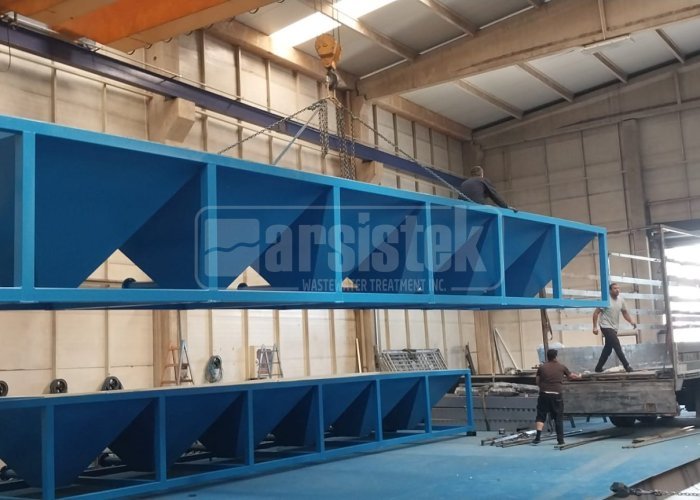
Project Gallery
8 fotoğraf



Other Services
Package Treatment Plant — Wastewater Treatment Systems
Package treatment facility is a compact-sized and modularly designed wastewater treatment system. Our package treatment ...
Detailed InformationMBR Wastewater Treatment - Membrane Bioreactor Systems
MBR Wastewater Treatment (Membrane Bioreactor) systems combine biological treatment with membrane filtration in a single...
Detailed InformationMBBR Wastewater Treatment - Moving Bed Biofilm Systems
MBBR wastewater treatment systems are a modern technology that provides high treatment efficiency thanks to the biofilm ...
Detailed InformationBiological Wastewater Treatment - Activated Sludge Systems
Biological wastewater treatment is a natural and efficient method of wastewater treatment that utilizes microorganisms. ...
Detailed InformationIndustrial Wastewater Treatment - Solutions for Industrial Facilities
Industrial wastewater treatment plants are advanced technology systems designed for the treatment of factory and industr...
Detailed InformationTreatment Plant Operation Services
Wastewater treatment plant operation service ensures the professional management of your existing facility with our expe...
Detailed InformationUV Disinfection Systems
UV disinfection systems are environmentally friendly solutions that disinfect water using ultraviolet rays without the u...
Detailed InformationReverse Osmosis Systems
Reverse osmosis (RO) systems are advanced treatment technologies that purify water at high pressure using semi-permeable...
Detailed InformationMobile RO Water Treatment Systems
Mobile RO water treatment systems are portable solutions that integrate reverse osmosis technology on a container or tra...
Detailed InformationSand and Carbon Filtration Systems
Sand and carbon filtration systems are effective water treatment solutions that remove sediment, suspended solids, chlor...
Detailed InformationUltrafiltration UF Systems
Ultrafiltration UF systems are advanced treatment technologies that remove microorganisms, suspended solids, and high mo...
Detailed InformationTrailer Water Treatment Systems
Trailer water treatment systems are mobile solutions that are integrated onto a trailer and can be transported to the de...
Detailed InformationFrequently Asked Questions
Yes, lamella systems are 5-10 times more efficient than conventional sedimentation tanks. The effective sedimentation surface significantly increases due to the inclined plates. For the same treatment capacity, 80% less space is used.
This angle range is the optimum slope that allows particles to slide off the plate surface and collect at the bottom. At lower angles, particles adhere to the plate, while at higher angles, the sedimentation efficiency decreases. The ideal balance point is 55°-60°.
Material selection is made according to the characteristics of the wastewater. For general applications, epoxy-coated carbon steel is preferred. For corrosive wastewaters, 304 or 316 stainless steel is used. In some special applications, plastics such as PP and PE may also be preferred.
Lamella systems are commonly used in industrial wastewater treatment for pre-settling after coagulation-flocculation and before biological treatment, as well as in drinking water preparation facilities. They are also preferred in sectors such as mining, food, and metal plating.
Lamella systems require minimal maintenance. Periodic cleaning of the plate surfaces and inspection of the sludge collection area is sufficient. Thanks to the modular plate design, individual cleaning or replacement can be easily performed. A general inspection once or twice a year is adequate.
The modular structure of lamella systems allows for easy capacity increase. Capacity can be increased by 2-3 times by adding additional plate modules to the existing tank or by establishing parallel units. This feature offers a significant advantage in adapting to sectoral growth.