

























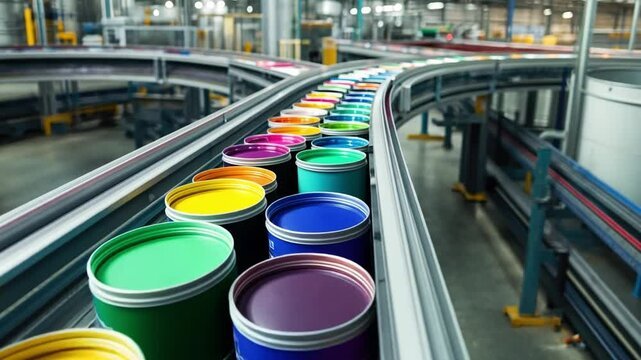
Advanced oxidation with Fenton, chemical precipitation, and activated carbon multi-barrier treatment for wastewater from paint/varnish factories containing solvents, pigments, and heavy metals.
The paint and varnish industry wastewater treatment is a challenging field characterized by high toxicity and low biodegradability. Paint factories produce water-based and solvent-based paints; both have different wastewater characteristics.
The COD values in paint wastewaters are at low levels of 2,000-15,000 mg/L, with a BOD/COD ratio of around 0.2. This low ratio indicates that classical biological treatment will be insufficient. Heavy metals (Pb, Cd, Zn, Cu) are found at levels of 5-50 mg/L, while solvents (toluene, xylene, MEK) are present at 100-2,000 mg/L.
Arsistek solutions for the paint industry include a combination of Fenton oxidation, chemical precipitation, air stripping, activated carbon adsorption, and biological post-treatment. This multi-barrier approach ensures compliance with discharge standards by breaking down even the most challenging organic compounds.
Fenton Advanced Oxidation Process
The Fenton process is one of the most effective techniques for breaking down refractory organics in dye wastewater. Hydroxyl radicals (•OH) formed when H2O2 and Fe2+ (ferrous sulfate) come together attack even the most difficult organic molecules.
Optimum operating conditions: pH 3-4, Fe2+/H2O2 ratio 1:5-1:10, reaction time 60-120 minutes. After the reaction, the pH is raised to 8-9 to precipitate and remove iron.
Fenton provides 70-90% COD removal in dye wastewater and makes the subsequent biological stage possible. It raises the BOD/COD ratio from 0.2 to 0.5-0.6.
Water-Based vs Solvent-Based
Water-based paint wastewater: Contains pigment, acrylic resin, and thickener. Biodegradability is higher. Color removal is the main challenge.
Solvent-based paint wastewater: Contains solvents such as toluene, xylene, and MEK. Air stripping and activated carbon are mandatory.
Heavy Metal Precipitation
Metals such as zinc, lead, chromium, and cadmium come from pigments. Alkaline precipitation (pH 9-10) is used to precipitate metal hydroxides.
The addition of polymer flocculant accelerates the settling process. It is separated by lamella settling or DAF.
Multi-Barrier System Design
In the treatment of the paint industry, a single method is insufficient. The combination of the following barriers is used:
- Equalization: 12-24 hours equalization tank for high pH/KOI fluctuations
- Air stripping: Column stripping and activated carbon adsorption for volatile solvents
- Fenton oxidation: Refractory organic degradation, increase in BOİ/KOİ
- Neutralization: Acidic Fenton effluent is adjusted to pH 7-8
- Heavy metal precipitation: Metal removal with alkaline pH
- Biological post: Activated sludge or MBR
- Activated carbon polish: Final toxicity removal
Advantages of Solutions in the Paint Industry
Paint Industry Reference Projects
8 visuals will be added soon — stay tuned for our reference projects and facility photos.
Frequently Asked Questions
The BOD/COD ratio in paint wastewater is at a low level of 0.2 — meaning that a large portion of organic matter is biologically non-degradable (refractory). Fenton hydroxyl radicals break down these refractory molecules and enable the biological stage.
After alkaline precipitation (pH 9-10), zinc levels drop to < 2 mg/L, lead to < 0.5 mg/L, and chromium to < 1 mg/L. For stricter limits, sulfide or ion exchange is used.
Fenton + heavy metal precipitation sludge forms in the range of 2-5 kg KM/m³. This sludge is classified as hazardous waste, and licensed disposal is mandatory.
It is possible, but solvent-based wastewater must first be subjected to air stripping; otherwise, volatile organics will poison the biological stage.
After Fenton + biological treatment, color is generally sufficiently removed. For stricter color standards, ozone or PAC (powdered activated carbon) is added.
The investment and operating cost is 30-50% higher than standard industrial treatment due to the requirement for multiple barriers. However, it provides economic gain compared to the risk of connection or closure penalties to the OSB sewer line.