

























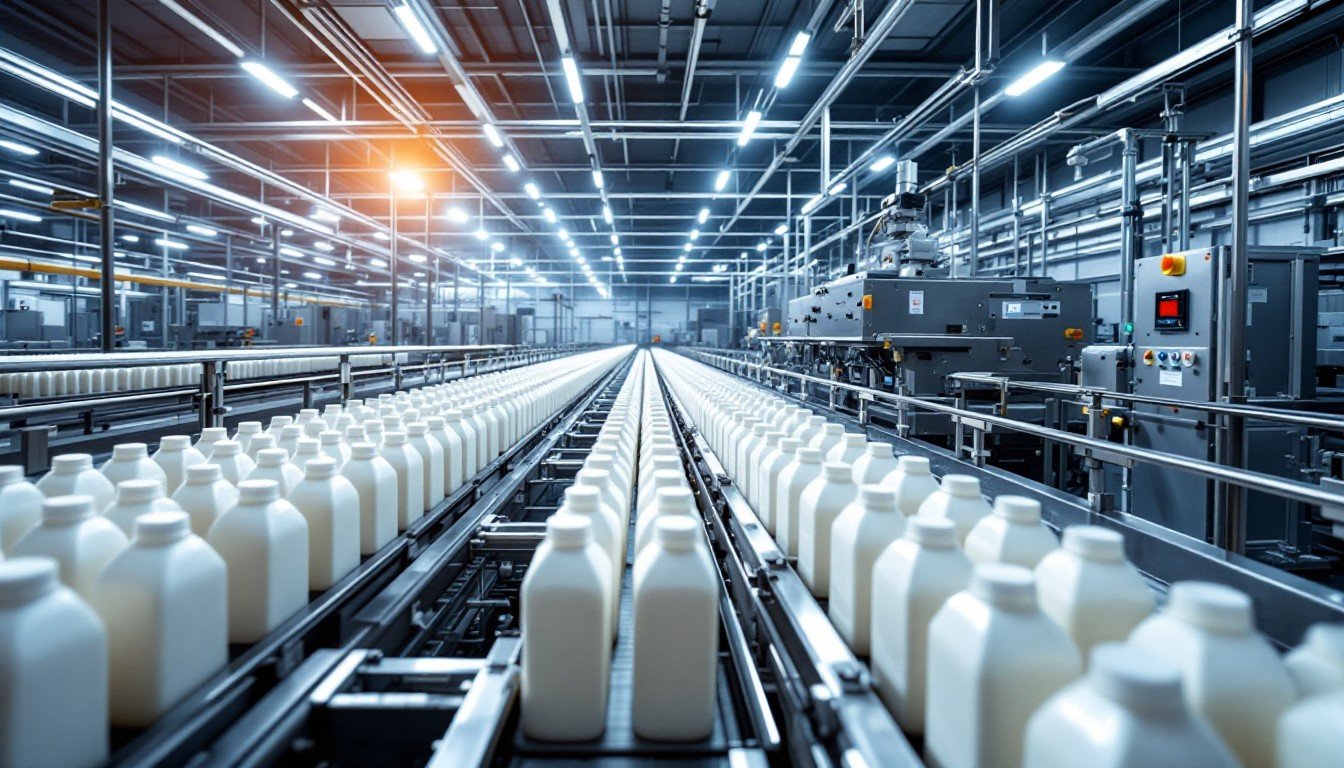
Wastewater from dairy and dairy product production facilities requires special treatment due to its high lactose, protein, and fat content. High-efficiency solutions with dairy wastewater treatment systems.
Wastewater Treatment Systems for Dairy Facilities
Milk plant wastewater treatment systems are specialized solutions designed to treat the wastewater from milk and dairy product production facilities in accordance with environmental standards. Since dairy wastewater contains high amounts of lactose, protein, fat, and organic matter, it requires special pre-treatment before biological treatment.
The BOD value of milk plant wastewater ranges from 1,000 to 4,000 mg/L, while the COD value varies between 2,500 and 7,000 mg/L. Additionally, the fat content is found to be between 50 and 500 mg/L, and the TSS is at levels of 500 to 2,500 mg/L. Wastewater treatment systems for milk factories provide solutions with process designs suitable for these high pollutants.
As a result, our dairy wastewater treatment plants include pH balancing, DAF (dissolved air flotation), MBBR or activated sludge, final sedimentation, and optional UV disinfection stages. Moreover, it is possible to produce biogas from organic waste using an anaerobic digester. Dairy wastewater treatment systems provide over 95% treatment efficiency and offer complete protection against environmental penalties.
In milk plant wastewaters, pH variations occur primarily due to CIP (Clean-in-Place) cleaning wastes. Therefore, the pH balancing stage is of critical importance. Milk factory wastewater systems overcome these challenges through multi-stage treatment.

Wastewater Characterization and Treatment Process
- BOD Load: 1,000-4,000 mg/L organic pollution
- COD Load: 2,500-7,000 mg/L chemical oxygen demand
- Lactose: High carbohydrate content
- Oil-Fats: 50-500 mg/L milk fat
- pH Fluctuation: Variable with CIP chemicals
- Temperature: 30-50°C due to pasteurization
- Conductivity: High salt content
- SS: 500-2,500 mg/L suspended solids
Discharge Standards and Application Details
- Cheese Factories: Whey with high BOD
- Yogurt Production: Acidic wastewater
- Milk Powder Facilities: Atomizer and evaporator waters
- Butter Production: High fat content
- Ice Cream Factories: Sugary concentrated wastewater
- UHT Milk: Cooling and washing waters
- Discharge BOD: <50 mg/L discharge compliance
- Biogas: Possibility of anaerobic recovery
How is Dairy Plant Wastewater Treated?
The wastewater treatment process in a dairy facility begins with the removal of solid materials using a bar screen and a sieve. Additionally, if there is whey, it is stored separately and directed to a different line. This preliminary separation is critical in dairy factory wastewater treatment systems.
In the second stage, the DAF unit removes fats and milk solids by flotation. Then, flow rate and pH are stabilized in the balancing tank. Furthermore, the temperature is reduced to an appropriate level for the biological process through cooling. After this, the dairy wastewater enters the MBR or activated sludge system.
As a result, lactose and protein are broken down by microorganisms during biological treatment. In the final settling tank, sludge is separated, and clean water is obtained. Optional UV disinfection ensures microbiological safety. With dairy product wastewater treatment systems, the effluent BOD is maintained below 50 mg/L and full compliance with environmental regulations is achieved.

Advantages of Our Solution
Project Gallery
8 visuals will be added soon — stay tuned for our reference projects and facility photos.

Frequently Asked Questions
Whey should be collected separately due to its very high BOD content. It can be converted into biogas through anaerobic treatment or can be utilized through a concentration process as a product. It is not recommended to be directly fed into the general dairy wastewater treatment system.
CIP (Clean-in-Place) wastes contain acid and alkaline chemicals. It is neutralized in the pH balancing tank. In dairy factory wastewater treatment systems, it is maintained between pH 6-9 with automatic dosing pumps. Then it is sent for biological treatment.
Yes, milk fats can solidify when cooled, leading to blockages in pipelines and pumps. Therefore, holding hot water before the DAF unit and regular oil removal operations are of critical importance.
Our wastewater treatment systems are suitable for dairy plants, cheese factories, yogurt facilities, ice cream production, milk powder factories, butter facilities, UHT milk factories, and milk-based dessert production facilities.
It is not mandatory, but it offers economic advantages for facilities with high BOD loads. Biogas is produced through anaerobic pre-treatment, and then the effluent quality is improved with aerobic biological treatment. For small facilities, aerobic treatment may be sufficient.