

























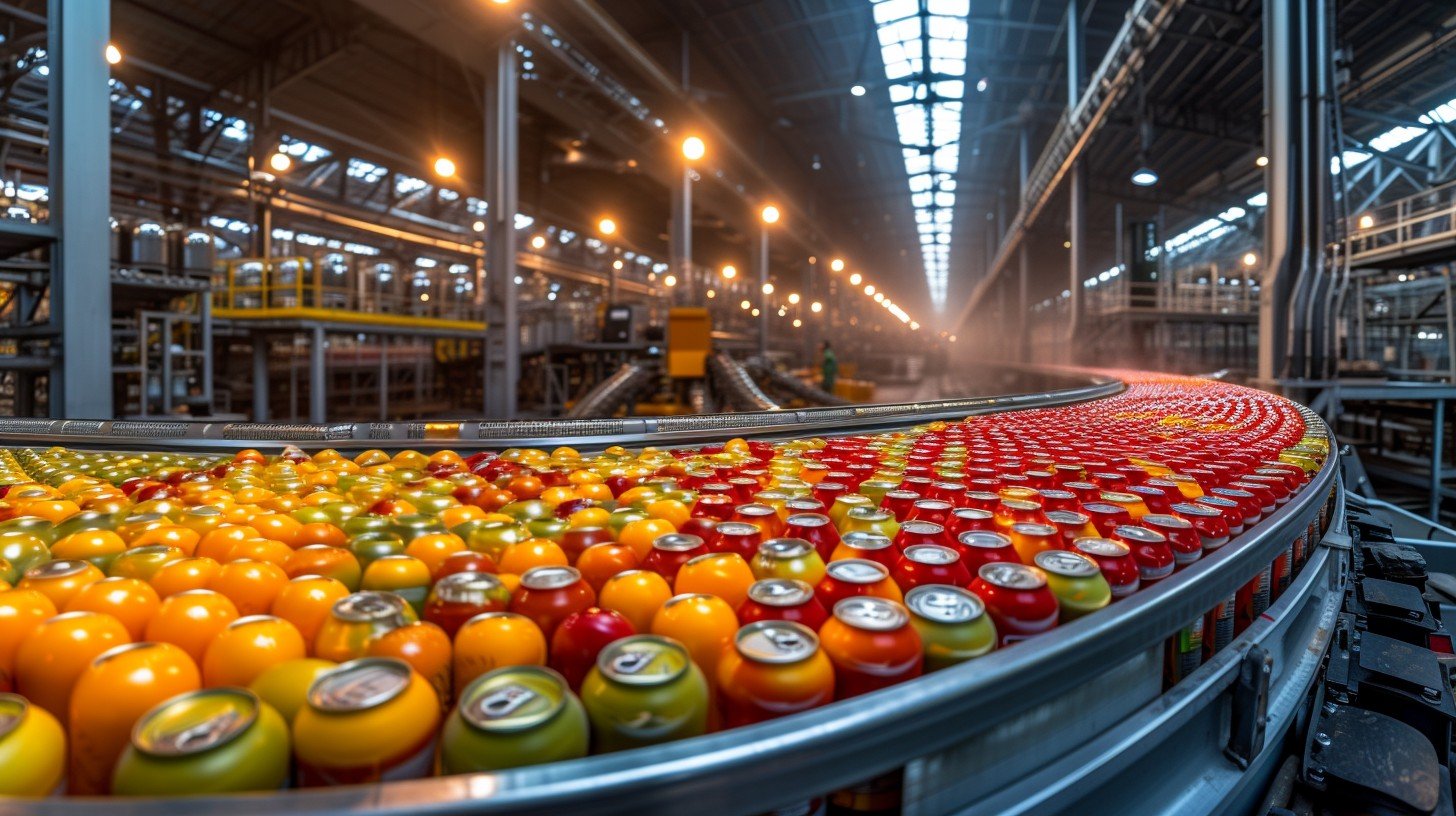
Anaerobic EGSB + aerobic polish systems managing high BOD, organic acid, and CIP wastes for beer, beverage, water, tea, coffee, and mineral water production facilities. Biogas recovery from carbohydrate-rich wastewater.
Wastewater from the beverage industry holds a special place within the food sector. It contains high concentrations of sugar, organic acids (lactic, acetic), alcohol residues, and CIP cleaning chemicals. The flow rate remains relatively stable as long as the production line (filling) does not stop.
Typical parameters: KOİ 2,000-10,000 mg/L, BOİ 1,500-6,000 mg/L, pH 3-12 (fluctuating due to CIP), AKM 200-800 mg/L. In breweries, KOİ can reach up to 15,000 mg/L.
Carbohydrates are extremely easily biodegradable (BOİ/KOİ > 0.7). This allows for the anaerobic processes (EGSB, UASB) to operate at very high efficiency — over 90% KOİ removal and intense biogas production are possible.
Wastewater Characteristics of Beverage Facility
The beverage industry is divided into broad sub-sectors: beer (highest BOD), soft drinks (high sugar), mineral water (low load), tea-coffee (tannins and color), alcoholic beverages (high ethanol residue). The process design for each differs.
The CIP (Cleaning-In-Place) batches in the production line are a challenge in themselves. Caustic and acid washes come in concentrated form. It is essential to separately collect CIP waste and provide controlled feeding from the buffer tank.
In the production of carbonated beverages, CO2 residues lower the pH and affect the buffering capacity in the anaerobic reactor. Therefore, pH pre-solution and alkalinity addition (NaOH or Na2CO3) are added.
EGSB / IC Reactor Technology
For beverage wastewater, EGSB (Expanded Granular Sludge Blanket) or IC (Internal Circulation) reactors are more efficient than UASB:
- 3-4 times more compact (space saving)
- 93%+ COD removal (UASB 80%)
- Faster commissioning
- High hydraulic load tolerance
- Vertical design with a length/diameter ratio of 5-20 m
- Upflow velocity of 3-5 m/hour inside
Typical Brewery Flow
- Preliminary screen + grinder
- Equalization tank (12-24 hours)
- CIP waste separate collection + dosing
- pH neutralization + alkalinity (Na2CO3)
- EGSB anaerobic reactor + biogas collection
- Aerobic MBBR (remaining KOİ + nitrification)
- Final sedimentation + sand filter
- UV disinfection
- Optional: recovery with UF + RO
Water Recovery and Sustainability
A beverage factory consumes an average of 3-7 L of water for 1 L of finished product. This usage is split with 50% going into production and 50% used for washing-cleaning. Thanks to the recovery of treated wastewater through UF + RO, it can be reused in washing-cooling processes.
Major brands such as Coca-Cola, Anadolu Efes, Tahincioğlu, and Çayex have committed to reducing consumption by 30-50% by 2030 as part of their water sustainability goals. Wastewater recovery is at the center of this objective.
The produced biogas can also be evaluated as carbon credit. There is a revenue potential of 15-50 USD per ton of CO2 equivalent in the voluntary carbon market.
Advantages of Beverage Wastewater Treatment Solution
Beverage Industry References
References of wastewater treatment plants we have completed for breweries, beverage, and mineral water factories.
Frequently Asked Questions
Yes, very economical. Brewery wastewater COD will be 10,000-15,000 mg/L. A facility with a daily capacity of 1,000 m³ produces approximately 4,000-6,000 m³ of biogas — which is equivalent to ~20,000 kWh/day of energy. The investment payback period is 2-4 years.
UASB is a static upflow reactor (1-1.5 m/h). EGSB maintains a granular sludge bed in an expanded state (3-5 m/h). The result: more compact, higher efficiency, more stable operation. The cost is slightly more energy with the internal circulation pump.
Sugar is a great food for bacteria — it's not a problem, it's an advantage. However, sudden sugar loads (e.g. tank cleaning) can shock the reactor with acidity. The balancing tank should be 24 hours.
There is a small amount, but it exists. Bottle washing water, filter backwash, demineralized membrane concentrate is formed. COD is low (200-800 mg/L), simple aerobic biological treatment is sufficient. The salt content of the RO concentrate may be high.
Tea and coffee wastewater contains high levels of tannins, which create a dark brown color. Tannins are biologically resistant. Solution: activated carbon adsorption + ozone oxidation. It is similar to textile treatment processes.
The anaerobic biogas project can achieve a reduction of 5,000-50,000 t CO2-eq/year through certification via VCS (Verra) or Gold Standard. With current carbon market prices (15-50 USD/ton), there is an annual additional revenue potential of 75,000-2,500,000 USD.