

























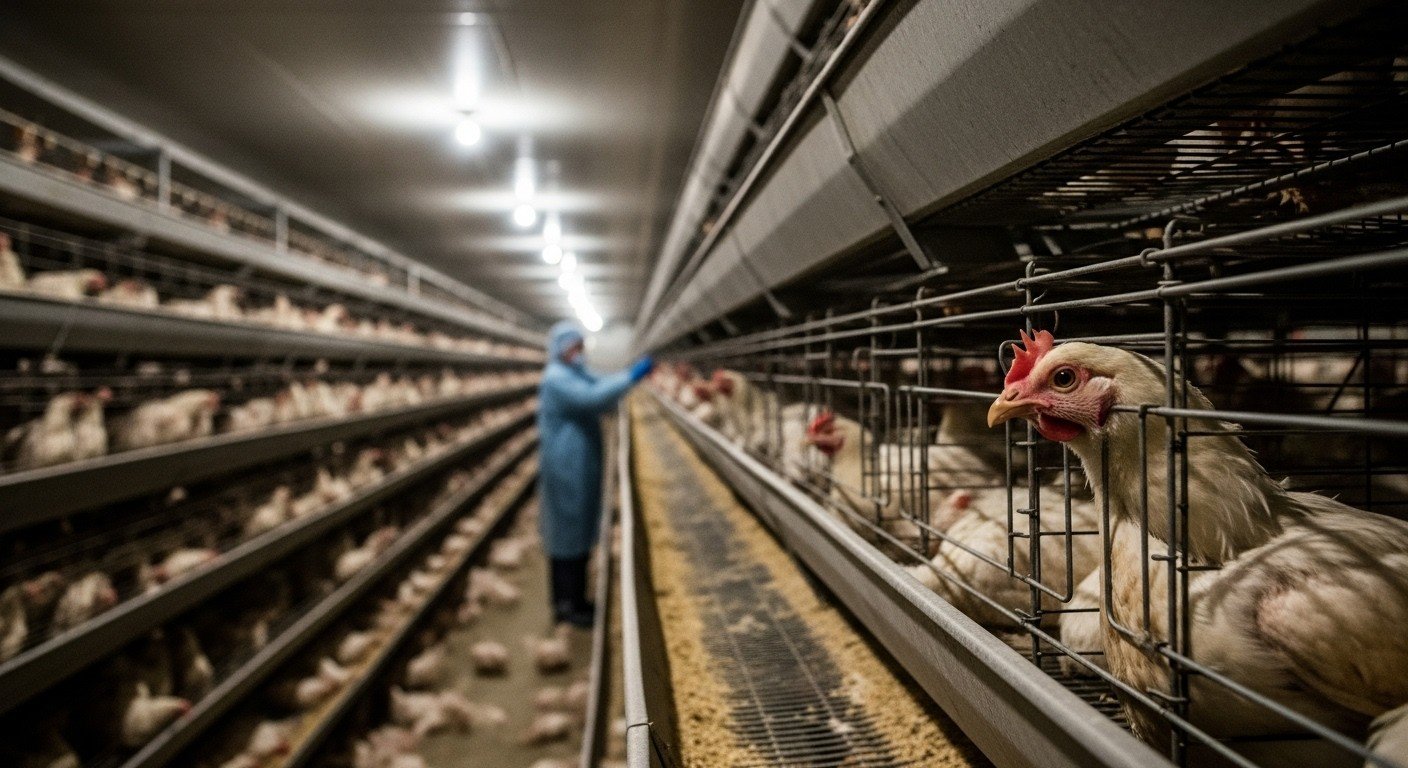
DAF, anaerobic UASB, biological nitrification, and customized pre-treatment for poultry processing facilities characterized by feather, blood, and high nitrogen load.
Poultry (chicken) slaughterhouse wastewater treatment encompasses the wastewater management of broiler and turkey processing facilities. Turkey ranks among the leading countries in the world for chicken meat production — billions of chickens are processed annually in the sector. In parallel, poultry processing wastewater treatment is a significant engineering field.
The BOİ value of chicken slaughterhouse wastewater ranges from 1,000-3,000 mg/L, KOİ 2,000-7,000 mg/L, oil and grease 200-800 mg/L, total nitrogen 200-600 mg/L (high!), and total phosphorus 30-80 mg/L. Feathers and organ particles require coarse screening. Water consumption is approximately 25-50 liters per chicken.
Arsistek chicken slaughterhouse solutions include coarse screening, static sieves, DAF, anaerobic UASB, nitrification-denitrification (MBR is recommended), and UV disinfection. Due to the high nitrogen load, special biological design is essential.
Structure of Poultry Slaughterhouse Wastewater
There are 5 main sources of wastewater in the poultry processing line: bleeding, scalding-feather removal, evisceration, cutting-slicing, and general cleaning (CIP).
Bleeding is of great importance. Each chicken produces 30-50 ml of blood. The blood COD is 400,000 mg/L (!). Therefore, blood is collected separately, coagulated, and utilized in animal feed (blood meal) production. Only 5% is allowed to mix with wastewater.
Feather removal is done with hot water (60°C). The resulting wastewater is warm and carries animal fat along with organic content. A thick grate at the feather exit point (5-10 mm) is mandatory — feathers clog the biological system.
Nitrification-Denitrification
Due to the high nitrogen load (up to 600 mg/L), NDN design is mandatory. First, the anoxic tank (denitrification) is connected, followed by the oxic tank (nitrification).
The return flow is made from oxic to anoxic. Raw wastewater is used as a carbon source (feeding to anoxic). The total nitrogen output is ensured to be <15 mg/L.
Advantages of MBR
For poultry slaughterhouses, MBR (Membrane Bioreactor) is recommended. Compared to the conventional system:
- 50% less space
- High MLSS with high SRT (15-25 days)
- Effluent BOD <5, COD <1 mg/L
- Pathogen retention — reduces UV requirement
Comparison of Slaughterhouse vs Chicken Processing Plant
Slaughterhouse (cattle) and poultry slaughterhouse wastewater may appear similar, but there are significant differences:
- Fat content: Slaughterhouse > Poultry (cattle is fattier)
- Nitrogen content: Poultry > Slaughterhouse (feathers have high N protein)
- Feather/hair load: Specific to Poultry — thick grid requirement
- Water consumption: Poultry: 50 L/unit, Slaughterhouse: 800-1500 L/unit
- Pathogen risk: High Salmonella in Poultry
These differences affect the design: high nitrogen biology + feather grid is prioritized for poultry; for slaughterhouses, DAF + fat separation is critical.
Advantages of Chicken Slaughterhouse Solutions
Chicken Slaughterhouse References
8 visuals will be added soon — stay tuned for our reference projects and facility photos.
Frequently Asked Questions
1 ton of chicken blood COD is approximately 400,000 mg/L. If it escapes into wastewater, it increases the treatment load by 10 times. The separately collected blood is coagulated and sold as blood meal (animal feed) for 200-400 USD per ton.
The wastewater coming from the feather removal station first passes through a 5-10 mm thick bar screen, and then through a 0.5-1 mm static screen. The collected feathers are sent for disposal or to rendering (feather meal) facilities.
SKKY Table 5.3 (slaughterhouse): TN limit 60 mg/L. Chicken wastewater raw TN up to 600 — that is, 90%+ nitrogen removal is required. This is only possible with nitrification-denitrification (NDN).
MBR provides high MLSS (10,000-12,000 mg/L) with high SRT (20+ days). High SRT allows for the easy development of slow-growing nitrifying bacteria. Additionally, since the membrane output is pathogen-free, the need for UV decreases.
Yes. Poultry wastewater can carry these pathogens. A 4-log inactivation is achieved in the effluent with UV (40 mJ/cm²) or chlorine (1-3 mg/L residual). The MBR membrane already retains bacteria.
Yes. Water treated with UF+RO is reused in facility exterior washing, cooling tower feeding, and auxiliary processes. It cannot be returned to the food line (hygiene regulations). A water saving of 30-50% is possible.