

























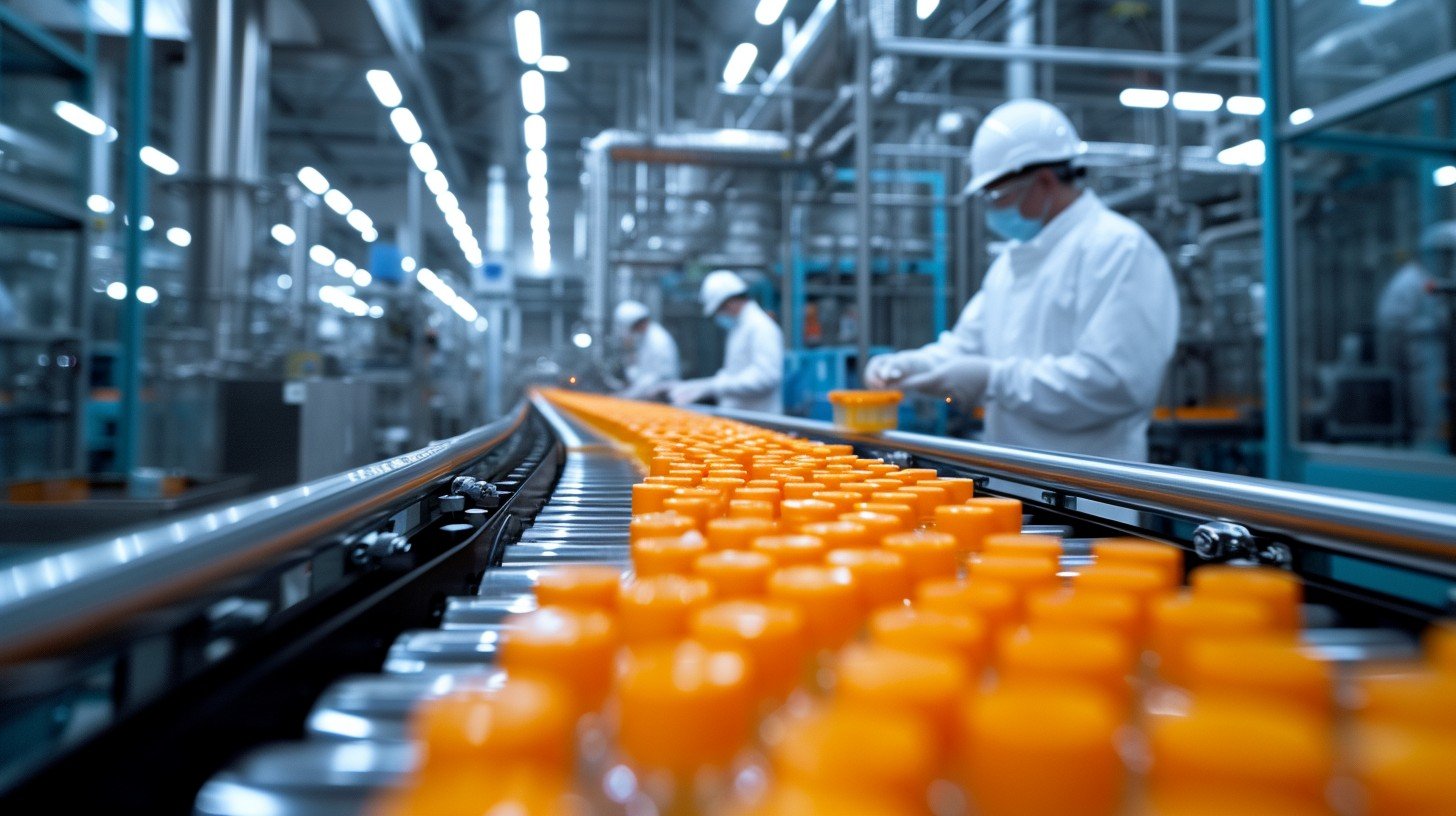
Wastewater from fruit juice production facilities requires special treatment due to its high sugar, organic acid, and fruit pulp content. With our sector-specific solutions, we ensure full compliance with environmental standards.
Fruit Juice Plant Wastewater Treatment
Fruit juice wastewater treatment systems are designed to efficiently treat the highly organic wastewater from fruit processing and beverage production facilities. Fruit juice wastewater contains high levels of sugar, organic acids, pectin, fruit pulp, and colorants. Therefore, beverage factory wastewater treatment systems require industry-specific process design.
The BOD value in fruit processing wastewater reaches extremely high levels of 2,000-8,000 mg/L, and COD ranges from 4,000-15,000 mg/L. Additionally, the pH is generally acidic (between 3-5). The TSS content varies between 500-3,000 mg/L. Wastewater treatment systems for fruit juice facilities require special optimization for this challenging character.
As a result, our fruit juice wastewater treatment plants include pH balancing, equalization tank, anaerobic UASB or EGSB reactor, aerobic biological treatment, and final sedimentation stages. Moreover, they can adapt to seasonal load variations with MBBR technology. Additionally, for canned food factory wastewater systems, lamella sedimentation is applied.
An important feature of fruit juice factory wastewater is its seasonal variability. During the harvest season, the flow and organic load increase significantly, while in winter months, it decreases to a minimum level. Therefore, fruit juice wastewater treatment systems are designed to be flexible and modular. Furthermore, energy recovery from the organic load is provided with the option of biogas production.

Wastewater Characterization and Treatment Process
- BOD Load: 2,000-8,000 mg/L organic pollution
- COD Load: 4,000-15,000 mg/L chemical density
- Sugar Content: High glucose and fructose
- Organic Acids: Citric, malic, ascorbic acid
- pH: 3-5 acidity range
- Pectin: Viscous organic matter
- Seasonal Load: 5-10 times increase during harvest period
- Coloring Substances: Tannin and anthocyanin
Discharge Standards and Application Details
- Fruit Juice Factories: Orange, apple, grape, sour cherry
- Concentrate Production: Evaporator wastewater
- Must Facilities: Grape processing high BOD
- Canning Factories: Tomato, pepper, paste
- Jam and Marmalade: Sugary wastewaters
- Discharge BOD: <50 mg/L discharge standard
- Anaerobic Biogas: High methane yield
- Seasonal Flexibility: Modular capacity increase
How is Fruit Juice Wastewater Treated?
The wastewater treatment process for fruit juice begins with the removal of fruit pulp using a pre-screen. In addition, peels, seeds, and large particles are separated. Then, acidity is neutralized in the pH balancing tank.
In the second stage, load fluctuations during the harvest season are stabilized in the balancing tank. Moreover, temperature is adjusted through cooling. It is then directed to an anaerobic UASB or EGSB reactor. Here, organic matter is converted into methane and carbon dioxide in an oxygen-free environment.
As a result, the anaerobic effluent is given to aerobic biological treatment. Aerobic treatment completely breaks down the remaining organic matter. Clean water is obtained through final sedimentation or membrane filtration. This multi-stage process in beverage factory wastewater treatment systems provides high efficiency and low operating costs. The biogas produced can meet a significant portion of the facility's steam and heat needs.

Advantages of Our Solution
Project Gallery
4 fotoğraf
Frequently Asked Questions
Fruit juice factories operate at maximum capacity during the harvest season and then decrease to a minimum. Therefore, the balancing tank is designed to be large, and the biological system is implemented with a flexible process such as MBBR technology. During off-season periods, a microorganism maintenance strategy is applied.
Yes, due to its viscous structure, pectin can cause clogging in membrane systems and pumps. For this reason, in fruit juice wastewater treatment systems, an enzymatic addition or hydrolysis pre-treatment stage is applied before anaerobic treatment. Pectins are broken down and prepared for subsequent treatment.
Fruit juice wastewater is an excellent biogas substrate due to its high carbohydrate content. 0.30-0.40 m³ of methane can be produced per unit of COD removal. With this produced biogas, 50% of the facility's energy needs can be met. It operates in integration with anaerobic biological treatment.
Natural color substances such as tannin and anthocyanin are removed by activated carbon adsorption, coagulation-flocculation, or ozonation. In addition, the application of activated carbon filter solves color and odor problems.
Wastewater from canning factories is similar to fruit juice wastewater but may contain higher sodium content (preservation salt) and oil. The temperature is higher in paste production. Therefore, wastewater treatment systems for fruit juice require adaptation for canning applications.
Our fruit juice wastewater treatment facilities are designed with capacities ranging from 50 m³/day to 10,000 m³/day. Compact solutions are offered for small local fruit juice producers, while modular advanced treatment systems are provided for large integrated facilities.