





















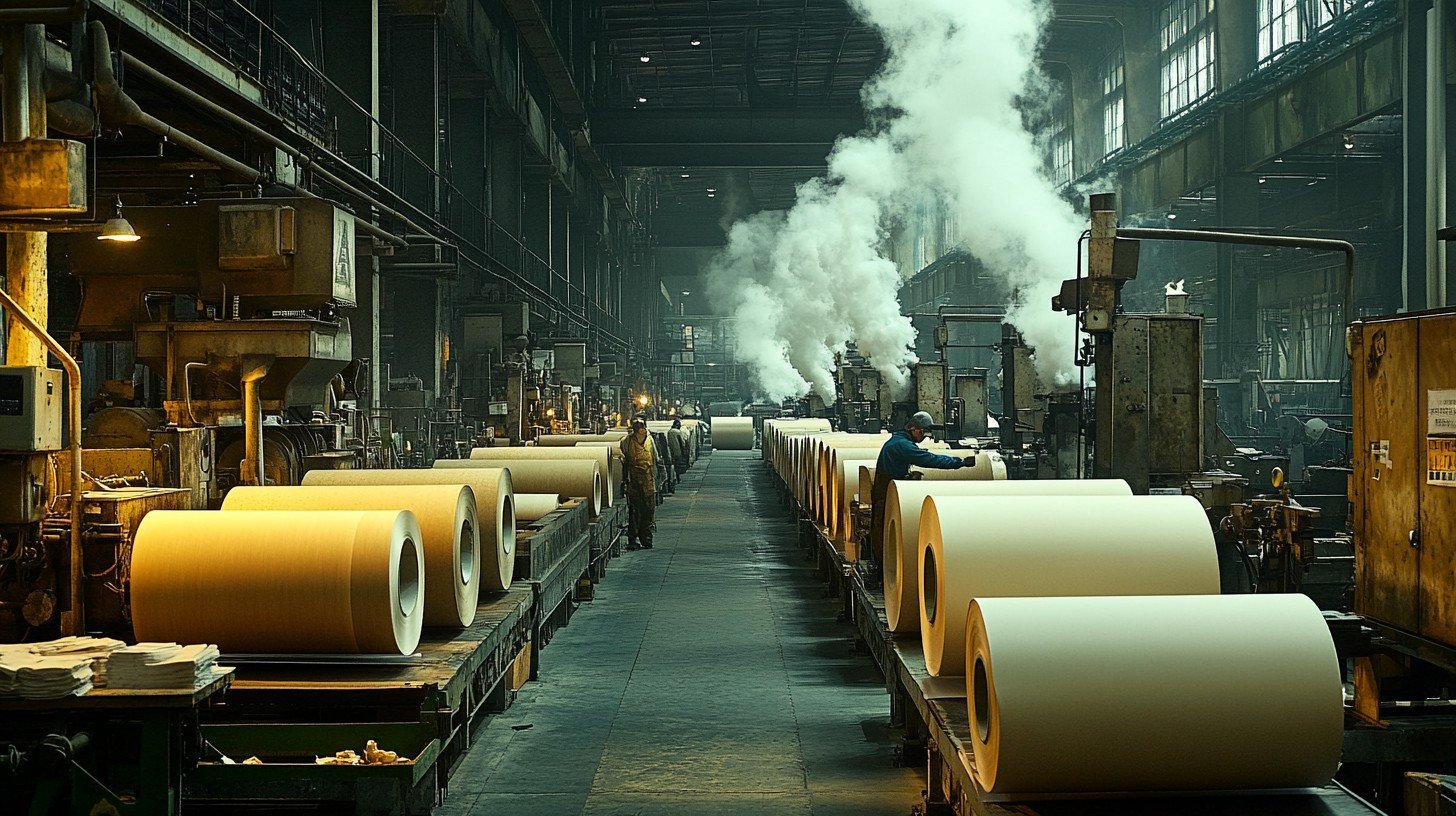
Combination of anaerobic UASB + aerobic biological treatment for paper mill wastewater containing cellulose, lignin, and chlorine compounds. High volume, fiber recovery, and color removal solutions.
Pulp and paper industry wastewater treatment requires specialized expertise due to the sector's high water consumption and complex wastewater profile. A paper mill produces 10-100 m³ of wastewater per ton of paper; this amount is well above the global industry average.
The BOİ value of paper wastewaters ranges from 800-3,500 mg/L, KOİ from 2,000-10,000 mg/L, and AKM (suspended solids) from 500-3,000 mg/L. Additionally, there are high molecular weight colored organics derived from lignin and ink residues in recycled paper production.
Arsistek's solutions for the paper industry include a combination of primary fiber recovery (DAF), anaerobic UASB reactor, aerobic activated sludge, and color removal. The anaerobic stage generates biogas to meet the facility's energy needs, and the recovered fiber is reintroduced into production.
Wastewater Characterization in the Paper Industry
Pulp and paper production wastewater varies significantly depending on the production line. Kraft pulp (cellulose extraction) wastewater contains high levels of lignin and sulfur; the AOX (adsorbable organic halides) parameter is critical.
Recycled paper production (deinking) wastewater contains inks, fillers, and microplastics. The color parameter is very high. Tissue (thin paper) production wastewater has relatively low COD but high fiber loss.
Sticky residues are a significant problem. These cause blockages in membranes and pipes. Oil-grease type sticky residue removal systems are the primary pre-treatment step.
Fiber Recovery (DAF)
60-80% of the TSS in wastewater is recoverable fiber. Dissolved Air Flotation (DAF) is used to collect it by floating.
The collected fiber is reused in the production of thick kraft paper or cardboard. It provides both raw material savings and sludge reduction.
Anaerobic UASB / EGSB
Pulp wastewater with high COD is treated in an anaerobic UASB or EGSB reactor with 75-90% COD removal.
The produced biogas (CH4 ~65%) meets 20-40% of the facility's energy needs through a steam boiler or cogeneration.
Color and AOX Removal
The most challenging parameters of paper wastewater are color and AOX. Lignin derivatives are high molecular weight colored organics that are difficult to biologically degrade.
For color removal, ozonation, coagulation (PAC or alum), or membrane (NF/UF) is used. In modern facilities, a reduction to 100-150 Pt-Co units of color is achieved.
AOX (chlorinated organics) is reduced at the source using elemental chlorine-free (ECF) or totally chlorine-free (TCF) bleaching technology. Aerobic biological treatment removes 50-70% of AOX; for stricter limits, activated carbon is used.
Advantages of Solutions in the Paper Industry
Paper Industry Reference Projects
8 visuals will be added soon — stay tuned for our reference projects and facility photos.
Frequently Asked Questions
Modern integrated factories consume 10-30 m³/ton, while older systems consume 60-100 m³/ton. With a reclaimed water system, this figure can be reduced by 50%.
0.35 m³ of biogas (CH4 ~65%) is produced per 1 kg of removed COD. 5,000 m³/day of paper wastewater generates approximately 6,000-10,000 m³/day of biogas — this meets a significant portion of the energy needs of the facility.
Fibers collected from DAF are mixed into kraft pulp with over 95% purity or used in the production of cardboard/corrugated cardboard. Tons of fiber loss is prevented.
Yes. Deinking wastewater contains ink, polymer filler, microplastics, and adhesive. The color parameter is very high. Additional flotation, microflotation, and special color removal are required.
AOX (adsorbable organic halogens) are carcinogenic and persistent pollutants. The SKKY and EU IPPC directive impose strict limits (generally < 0.5 mg/L). ECF/TCF bleaching + biological + GAC is employed.
Wastewater recovery water coming from the unit (UF + RO) is used for washing on the wire, cooling tower makeup water, and fresh-stock dilution. The freshwater requirement can be reduced by 50%.