















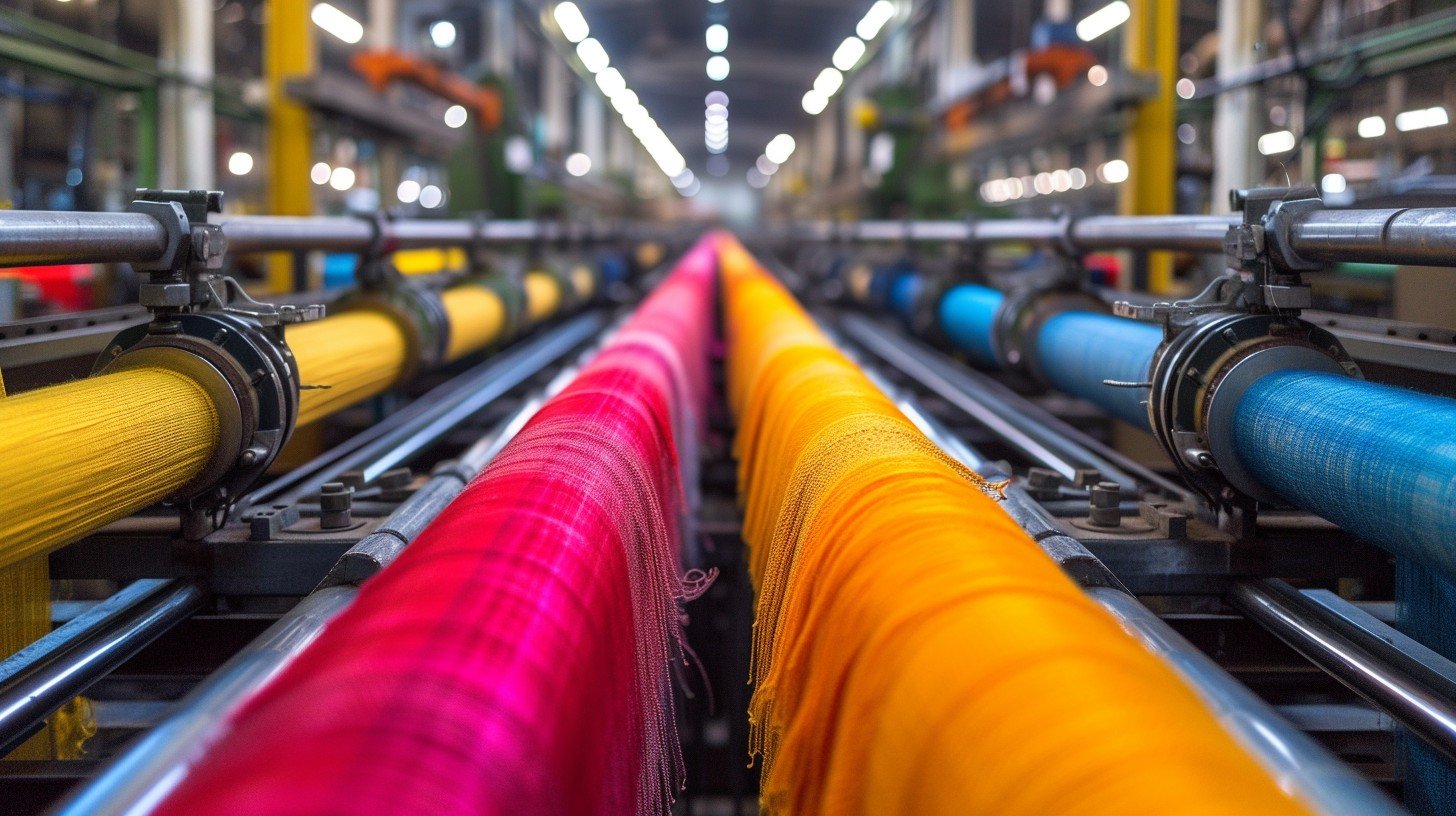
For textile wastewater originating from dyeing, finishing, and printing facilities with intense color, high KOİ, and variable pH, a combination of coagulation + biological + ozone/activated carbon guarantees an effluent color below 200 Pt-Co.
Textile wastewater is among the most difficult to treat industrial wastewaters due to the reactive/disperse dyes, salts, bleaching chemicals, and finishing agents it contains. Dye molecules are resistant to biological degradation; therefore, conventional biological treatment is insufficient for color removal.
As one of the world's largest textile producers, Turkey has strict discharge limits for color parameters (Pt-Co). The Ministry of Environment defines special limits in the Textile Industry Sector Regulation, RES (Color Recognition System) for wavelengths of 280-436-525-620 nm.
Arsistek designs industry-specific processes for knitting, weaving, denim, carpet, sock, finishing, and printing facilities. Depending on the characterization of your wastewater, we offer chemical + biological + ozone/PAC hybrid solutions.
Textile Wastewater Characteristics
Textile wastewater shows significant variations depending on the type of production. Knitting facilities using reactive dyes create unstable color loads, while denim washing facilities contain high suspended solids and indigo residues. Carpet and woven finishing facilities, on the other hand, contain high levels of salt and sulfate.
Typical parameters: BOD 800-3,000 mg/L, COD 200-800 mg/L, color 1,000-5,000 Pt-Co, pH 6-12 (fluctuating), sulfate 500-2,000 mg/L. This variable structure requires a robust and flexible process design.
Caustic and acid washing batches in the production line create sudden pH shocks. Therefore, equalization tank and automatic pH control are of critical importance.
Textile Treatment Process Flow
- Screening + balancing + cooling (hot paint bath flow)
- pH neutralization (automatic H2SO4/NaOH dosing)
- Coagulation-flocculation (FeCl3 + polymer)
- Primary sedimentation or DAF
- Biological treatment (MBBR or activated sludge)
- Secondary sedimentation
- Ozone oxidation (color and resistant COD)
- Sand filter + activated carbon (high quality)
- If desired, water recovery with UF + RO
Key Equipment Used
- Ozone generator (50-500 g/hour)
- MBBR carrier bed reactor (special film bacteria)
- Hot waste plate-frame heat recovery exchanger
- Automatic polymer preparation unit
- Granular activated carbon (GAC) column filter
- Dual line balancing tank (for acid/alkali shock)
- SCADA — real-time pH, COD, flow monitoring
Regulations and Water Recovery Opportunities
Textile Sector Wastewater Discharge Standards (SKKY Table 10.1) require that COD < 250 mg/L, BOD < 100 mg/L, TSS < 100 mg/L, color RES values be met. Facilities operating within the organized industrial zone perform preliminary treatment, while the central facility of the organized industrial zone completes the final treatment.
The textile sector is among the top 5 sectors with the highest water consumption — 100-150 L of water is used for 1 kg of fabric. Thanks to the recovery of treated water through UF + RO, it is possible to reuse 50-70% in washing-rinsing processes. This significantly reduces both the water bill and the discharge load.
Additionally, under the BAT (Best Available Techniques) guidelines, MBR technology is preferred in the IPPC integrated environmental permit. A reducing anaerobic step and the use of activated carbon are recommended for dye reduction.
The Arsistek Difference in Textile Treatment
Our Textile Reference Projects
References of wastewater treatment plants with color removal completed in leading textile organized industrial zones in Turkey.
Frequently Asked Questions
Reactive and disperse dyes are designed to be resistant to biological degradation (otherwise they would be removed during washing). Therefore, conventional biological treatment cannot eliminate color. Advanced oxidation/adsorption methods such as ozone, Fenton, or activated carbon are essential.
Pt-Co (Platinum-Cobalt) is a standard unit for measuring the color of water. For textile facilities, RES (Color Determination System) is used — there are separate limits at wavelengths of 436 nm (yellow), 525 nm (red), and 620 nm (blue). The general discharge limit is between 5-7 m⁻¹ depending on the wavelength.
It is dependent. Ozone is cleaner (only O2 waste) but has high OPEX. Fenton is cheap but produces iron-floc waste. For reactive dye-intensive facilities, Ozone is recommended for indigo/denim, while Fenton is suggested. A pilot test determines the optimal choice.
For a typical weaving facility, 50-70% of the daily wastewater is recovered at the quality of washing-rinsing water using UF + RO. This reduces the water bill by 40% and halves the volume of discharge wastewater. Details are available on our Wastewater Recovery page.
Yes. According to the OSB regulation, member companies are required to perform preliminary treatment for parameters such as color, AKM, oil-grease, heavy metals. Otherwise, you will disrupt the central facility of the OSB and be subject to penalties.
Yes. Container type package systems are ideal for textile facilities in the range of 50-500 m³/day. For larger facilities (1000+ m³/day), modular concrete tank systems are preferred. You can review our package treatment manufacturing service.