

















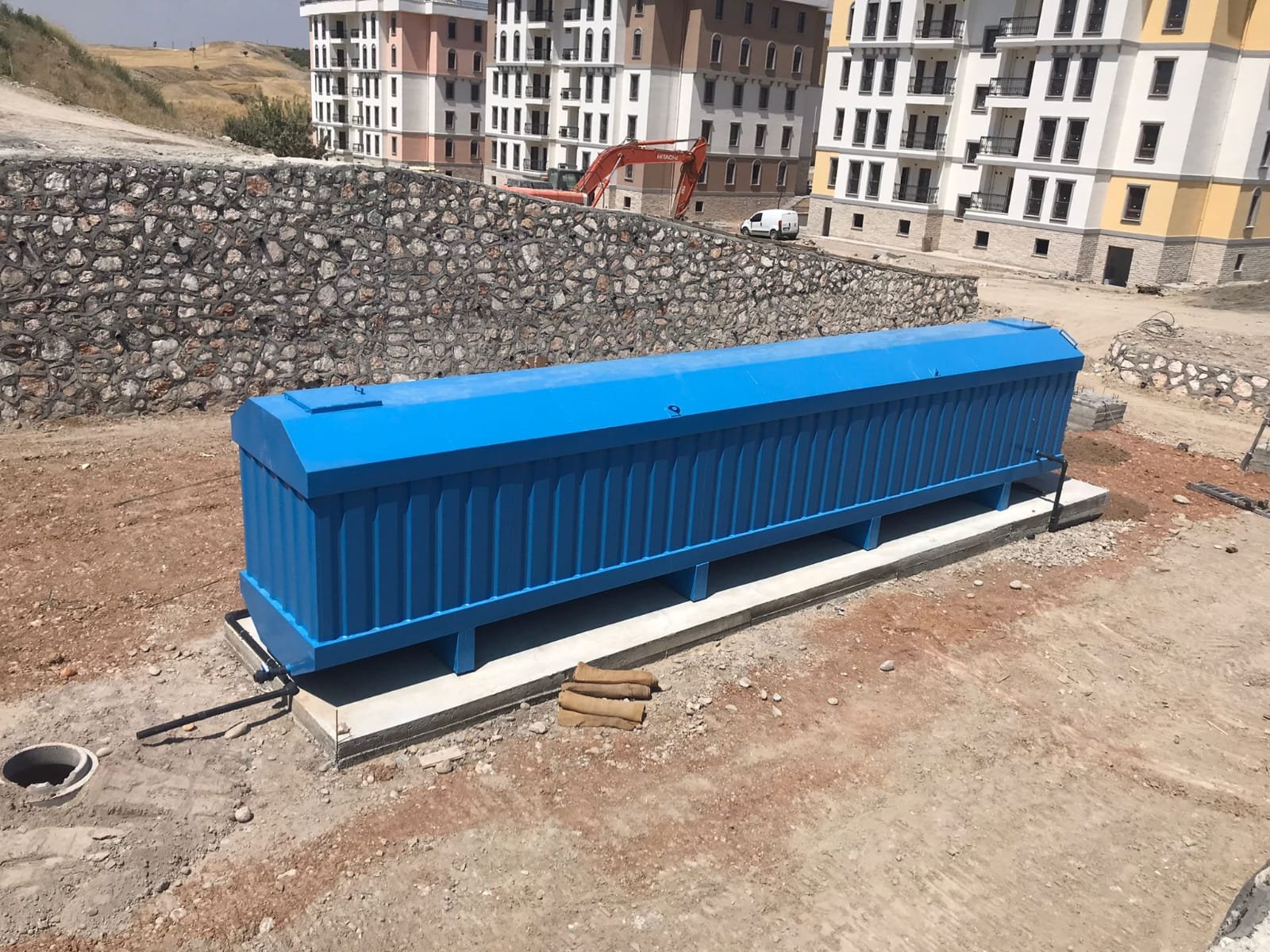
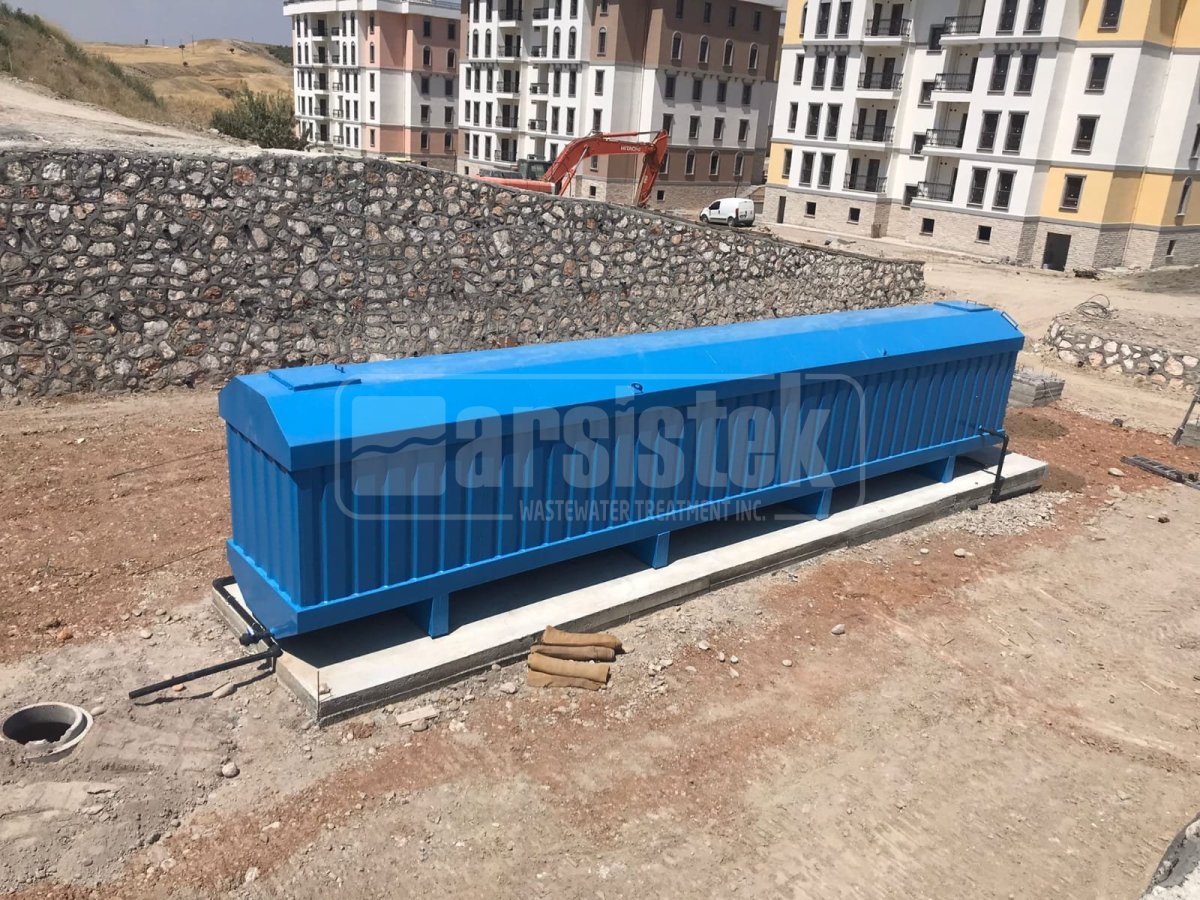
Short answer: In TOKİ projects, the package wastewater treatment plant has become a standard modular and rapid solution that can be commissioned within 1-4 weeks. Capacity is determined by the number of housing units multiplied by the per capita equivalent (PE); typically in the range of 1000-5000 people/day. The environmental permit process, EIA, and commissioning planning should be initiated immediately after the contract is signed.
TOKİ Treatment You Received: Why is Wastewater Treatment Critical?
TOKİ (Housing Development Administration) social housing projects are one of the most significant sources of urbanization in Turkey. Each TOKİ project creates a new population of between 500-10,000 people. This population cannot be delivered without wastewater treatment infrastructure. Additionally, a building occupancy permit cannot be obtained without completing the Ministry of Environment and Urbanization permit process.
For construction companies that win the tender, wastewater treatment is generally a neglected item. However, this approach carries two significant risks:
- Delivery time delay: A building occupancy permit cannot be obtained without the treatment plant being commissioned. This situation may trigger penalty clauses.
- Budget surprise: Late-planned treatment plants strain the budget with urgent purchases. An early-planned package system is standard and predictable in cost.
Advantages of Package Treatment for TOKİ Housing Projects
The package wastewater treatment system has become standard in TOKİ projects over the last 10 years. The main reasons for this are:
- Fast installation (1-4 weeks): Meets the occupancy delivery time. It is 5-10 times faster than a conventional concrete-built facility.
- Compact space usage: Fits between residential blocks or at the site entrance. Saves valuable space in TOKİ land parcels.
- Turnkey: Design, equipment supply, installation, and commissioning are managed under a single entity. There is no additional engineering burden on the construction company.
- Standard quality: Factory-controlled production ensures the same performance in every facility. Compliance with SKKY is guaranteed.
- Modular expansion: In projects delivered in phases, it is possible to add parallel units for subsequent phases after the minimum for the first phase.
- SCADA + automation: After commissioning, the operational burden on the TOKİ administration is minimal. Includes remote monitoring.
How is Capacity Calculated?
The package treatment capacity for TOKİ projects is calculated based on per capita equivalent (PE). The formula is simple:
Total PE = Number of housing units × Average number of people per apartment (3-4) × PE multiplier (1)
Typical Capacity Ranges for TOKİ Projects
| Project Size | Number of Housing Units | People (3-4 people/apartment) | Recommended Capacity |
|---|---|---|---|
| Small TOKİ | 100-300 housing units | 300-1,200 | 500-1,500 people/day |
| Medium TOKİ | 300-700 housing units | 1,200-2,800 | 1,500-3,000 people/day |
| Large TOKİ | 700-1,500 housing units | 2,800-6,000 | 3,000-6,000 people/day |
| Very Large TOKİ | 1,500+ housing units | 6,000+ | 6,000+ people/day (modular) |
Additionally, the peak factor must also be taken into account. In housing projects, the flow rate increases to 2-2.5 times the average during morning showers and evening hours. Therefore, the capacity of the balancing tank is critically important in the design.
Process Selection: SBR, MBBR, or MBR?
In TOKİ projects, three main types of package treatment processes are preferred:
SBR (Sequencing Batch Reactor) — Classic Choice
SBR package is an economical standard option for small to medium TOKİ projects. It operates with a 5-stage periodic cycle in a single tank. PLC automation ensures seamless operation. Generally ideal for capacities of 500-2,000 people/day.
MBBR (Moving Bed Biofilm Reactor)
A flexible alternative with high shock load resistance. It stands out in seasonal use or in developing neighborhoods (with gradually increasing occupancy rates). Its modular design allows for easy capacity increase in the future.
MBR (Membrane Bioreactor) — Premium Choice
MBR package provides the highest effluent quality. The effluent water has AKM < 1 mg/L, making it suitable for direct reuse. Thus, it can be evaluated for landscape irrigation and site cleaning. It is preferred in TOKİ projects near sensitive receiving environments.
Comparison Table
| Criterion | SBR | MBBR | MBR |
|---|---|---|---|
| Investment cost | Low | Medium | High |
| Space requirement | Medium | Medium | Lowest |
| Effluent quality | SKKY compliant | SKKY compliant | SKKY + Reuse |
| Water recovery | Limited | Limited | Direct |
| Operational complexity | Low | Lowest | Medium |
| Expansion | Parallel unit | Add carrier | Add membrane |
Environmental Permit Process: Start Early
In TOKİ projects, the permit process for the treatment plant should be initiated immediately after the contract is signed. Typical steps include:
- Preparation of Project Approval File (2-4 weeks): Design documents compliant with the Ministry of Environment
- EIA decision (if necessary): EIA may be required for large TOKİ projects
- Approval of Wastewater Treatment Plant Project: Approval from the Provincial Directorate of Environment
- Facility installation: 1-4 weeks (package system)
- Commissioning: Biological adaptation 2-4 weeks
- Environmental Permit Certificate: After performance tests
- Application for occupancy permit: Along with the environmental permit
This process takes a total of 4-6 months. If started early, the treatment will be ready while construction is completed. If started late, occupancy will be delayed.
7 Critical Steps After the Tender (Wastewater Treatment Side)
- Week 1: Request a preliminary study from a wastewater treatment expert (free)
- Week 2: Share project number, phase plan, and location information
- Weeks 3-4: Obtain technical proposal and indicative budget
- Weeks 5-8: Prepare the project approval file and submit it to the Directorate of Environment
- Months 2-3: Sign the contract and start equipment production
- Months 4-5: Field installation and assembly
- Month 6: Commissioning, performance tests, environmental permit application
Our TOKİ References (Selected)
As Arsistek, we have completed 22+ TOKİ projects. Some of these include:
- Yılkanur İnşaat A.Ş — İstanbul TOKİ (4,000 m³/day MBR wastewater treatment plant, 2026)
- MFK İnşaat A.Ş — Mersin TOKİ (6,000 people/day package treatment, 2025)
- Baran Grup A.Ş — Diyarbakır TOKİ (3,000 people/day, 2025)
- Hekimoğlu İnşaat A.Ş — Aydın TOKİ (2,000 people/day, 2025)
- Alfen İnşaat A.Ş — Diyarbakır TOKİ (2,000 people/day, 2025)
- Çelikmen İnşaat A.Ş — Ankara TOKİ (1,000 people/day, 2025)
- Bintaş İnşaat A.Ş — Bingöl TOKİ (2,000 people/day, 2024)
- Ermit İnşaat A.Ş — İzmir TOKİ (5,000 people/day, 2023)
- Har Proje Yapı A.Ş — Tunceli TOKİ (1,000 people/day, 2025)
- Surkent İnşaat A.Ş — Muş TOKİ (3,000 people/day, 2022)
- Zirve İnşaat A.Ş — Siirt TOKİ (2,000 people/day, 2015)
- ...and more in 11 different provinces
You can review all our projects on our references page.
5 Practical Tips for Construction Companies Winning the Tender
- Plan early: Request a preliminary study from a wastewater treatment expert within 1-2 weeks after signing the contract. Late planning causes delays in occupancy delivery.
- Share the phase plan: If the project will be delivered in phases, the treatment system can be designed modularly. This way, the initial investment is kept to a minimum.
- Get a turnkey solution: Design + equipment + installation + commissioning + environmental permit should be handled by a single entity. Working with multiple subcontractors causes delays.
- Select a reference supplier: Choose an experienced company for TOKİ projects. Our 22+ TOKİ references demonstrate how we work in this regard.
- Request SCADA + remote monitoring: After delivery to the administration, the facility should be able to operate independently. Modern package systems particularly offer this.
Conclusion
In TOKİ projects, the package wastewater treatment plant is a critical complementary component of the social housing delivery process. A well-planned package system provides significant advantages to the construction company with fast installation, turnkey service, and guaranteed compliance with SKKY. Starting the process early optimizes both time and cost.
As Arsistek, we offer free preliminary study + indicative budget + technical proposal to companies winning the tender with our 22+ TOKİ project experience. Additionally, our team provides full support in preparing the project approval file, environmental permit process, and commissioning stages.
Related guides: What is Package Treatment, How Package Treatment Works, Capacities and Sizing, SKKY Discharge Limits. You can contact us through our contact page to share your project details.
Atıksu arıtma uzmanı, çevre mühendisi. Endüstriyel su arıtma projelerinde 20+ yıl saha deneyimi.